Blog

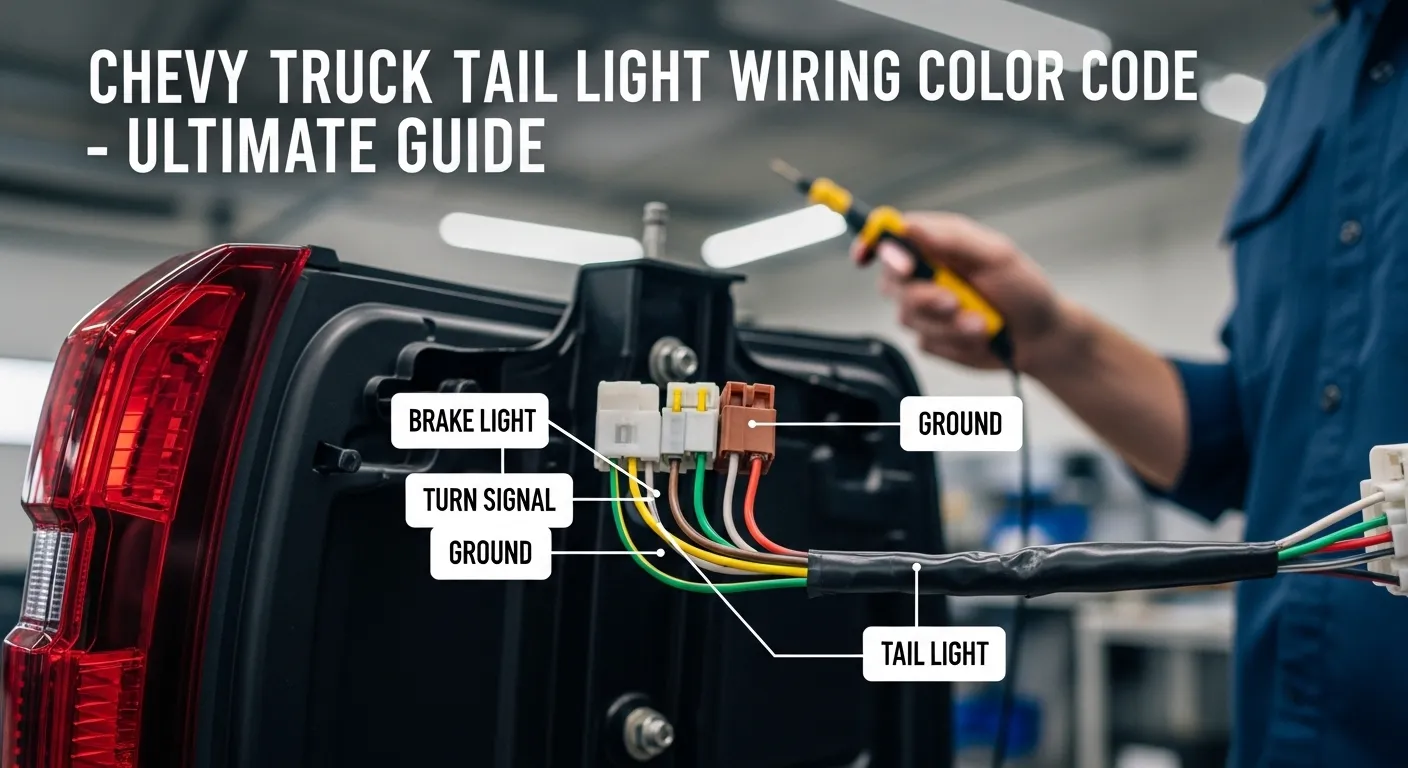
  • Chevy Truck Tail Light Wiring Color Code The Ultimate  Guide.

    Chevy Truck Tail Light Wiring Color Code The Ultimate  Guide.

    The wiring harness of a Chevrolet truck is a functional requirement that anyone working on the truck needs to decode to either do repairs or install aftermarket LED assemblies or install a trailer towing system.

    The wiring harness of a Chevrolet truck is a functional requirement that anyone working on the truck needs to decode to either do repairs or install aftermarket LED assemblies or install a trailer towing system. Over the decades, GM has been using a time-tested color-coding language, whereby technicians and DIY enthusiasts would quickly recognize the circuits without a schematic in their hands. Nonetheless, with vehicle architecture becoming more sophisticated than the primitive analog circuits of the 1970s to the Multiplexing and CAN-bus computer-controlled systems of , we now have a different perception of these colors.

    In simple terms, an understanding of when the brake signal is on a wire or the reverse signal is on a wire can save you many hours in troubleshooting, as well as costly repairs to your Body Control Module (BCM) in your truck. This tedious manual is an intergenerational dissection of Chevy truck tail light wiring, professional diagnostics regimen, and safety benchmarks necessary in the  car environment.

    The Existing Universal GM Color Standard, which is proven.

    Although there might be minor differences between certain years, Chevrolet has kept its rear lighting circuits at a very similar level. When you are working on a typical Silverado, Colorado, or Tahoe, these are the colors that you are most likely to find at the junction block under the rear bumper.

    Generational Breakdown: Development of the Harness.

    One of the practical requirements of a repair is to align your problem-solving actions to the particular period of your Chevy truck. The complexity in wiring has grown exponentially in the past 50 years.

    The Classic Era (1973 – 1987 “Square Body”)

    In such trucks, the wiring is all analog. The switch is directly connected to the light.

    The Shared Logic: Chevy had a single wire with both turn signals and brakes ( Yellow Left, Dark Green Right ). The turn signal switch on the steering column controlled this.

    Key Identification: This era harness will have a Pink or Orange wire, usually feeding the fuel gauge sender or interior dome lights.

    The GMT800 & GMT900 Era (1999 – 2013)

    This period saw the introduction of the Rear Lighting Junction Block which is behind the rear bumper on the driver side.

    The Junction Block: This has the tail lights connected to a central hub, rather than one continuous harness. This is a well known failure point; corrosion in this block tends to result in the Christmas Tree effect where the lights will wink in and out.

    Color Stability: The color standard of Brown/Yellow/Dark Green was adhered to during this period.

    The K2XX & T1 Era (2014 – 4)

    Chevrolet went on to make a transition to increasingly integrated LED systems with the introduction of the T1 platform.

    Logic-Level Wiring: In more trim Silverados, the BCM (Body Control Module) will measure the load on each wire. With no resistor on an LED bulb, the BCM will interpret a low draw and a “hyper-flash” or a car dashboard warning.

    Dedicated Brake Circuits: In some models, they started to separate the “Stop” and the “Turn” signals, and tried to add a separate Red or Purple wire to the combination.

    The Modern Frontier (5 –  Models)

    Chevrolet is headed towards CAN-bus controlled lighting in 

    The Digital Shift: On high-end trims, the tail light can consist of as few as three wires: Power, Ground, and a Data Wire. The BCM does not turn on a bulb by sending 12 V, but by transmitting a digital command to a small chip within the tail light housing.

    Caution: It is no longer possible to tap into these data wires with the traditional techniques to create trailer lights or accessories. To avoid frying the truck digital architecture, you need to connect an isolated trailer wiring module.

    Trailer Wiring vs. Truck Wiring: The Key difference.

    Another popular error is to think that the wires of the tail light of a truck are the same color as the trailer. Although they are similar, they are different.

    4-Way Flat Trailer Standard (SAE J1128)

    Brown: Tail/Running Lights (Matches Truck)
    Yellow: Left Turn/Brake (Matches Truck)
    Green: Turn Right/Brek (Matches Truck)
    White: Ground (Truck uses Black)

    7-Way RV Blade Standard.

    In the case of trucks that have a factory towing package, the 7-way plug adds a number of high-power circuits:

    Black or Red: +12V Auxiliary Battery Charge.
    Blue: Electric Trailer Brakes (as part of the Brake Controller)
    Purple/Grey: Reverse Lights (to turn off boat trailer surge brakes)

    Evaluative Diagnostic Protocol (Step-by-Step)

    When your Chevy tail lights are not working, this is a practical, proven order in which to follow to perform a safe and accurate repair.

    Step 1: The Fuse and Relay Audit.

    Check the Fuse Block Under-hood Before cutting wires. Most Chevy trucks have individual fuses on the Left and Right trailer circuits, and on the main truck lights. One blown fuse will cut only one side of your trailer and leave the truck running.

    Step 2: Ground Verification

    A bad ground causes 90% of tail light problems.

    Test: Continuity between the Black wire and the frame of the truck is to be checked using a multimeter. When the resistance exceeds 0.5 ohms, then the earth is corroded.

    Resolution: Wipe the frame to bare metal and put dielectric grease on them to stop oxidation in the future.

    Step 3: Voltage Load Testing

    A simple test light would be useful, but a multimeter is superior to modern trucks.

    Procedure: While the engine is on, verify that there is 1-12V at the Brown (Running) and Yellow/Green (Turn) wires.

    Note: When you find a ghost voltage (e.g., 3 – V ) it means that there is a partial short or a nonfunctioning BCM.

    Advanced FAQ: Troubleshooting Your Chevy Harness.

    Q: My turn signals are not functioning, my brake lights are. Why?

    A: Since Chevy shares the circuit (Yellow/Green) between them, the problem is unlikely to be in the rear wiring. The Turn Signal Switch (Clock Spring) of the steering column or a defective relay is generally the cause. The wires at the back merely pass whatever signal they are provided.

    Q: Can I use the reverse light (Light Green) as a backup camera?

    A: Yes, Light Green wire is still the tried and tested trigger in backup cameras in  models. But due to the fact that some cameras consume more power than the BCM prefers, it is a practical requirement that you employ a relay, in case you are also powering other high-output auxiliary LED pods.

    Q: What is the Ghost Trailer warning on my dashboard?

    A: New Subarus and Chevy have a Sense Circuit that senses the presence of a trailer by measuring the electrical resistance to the Brown wire. When you have some water in your trailer plug, it may form a bridge which will lead the truck to believe that a trailer is connected when not.

    Q: My LED tail lights are flickering, why?

    A: It is because of Pulse Width Modulation (PWM). Chevy trucks have been known to flicker power at a frequency that is invisible to the human eye, to save energy and bulb life. Incandescent bulbs do not respond whereas LEDs do. A “PWM Filter” or Capacitor is required to even out the signal.

     Best Practices of installation.

    The first objective is to make your Chevy truck more durable when modifying its wiring. The back of a truck is a salt, water, and road debris hostile environment.

    Do NOT Use Scotch-Loks: Plastic snap-on connectors are a failure waiting to happen. They cut into the insulation and enable moisture to destroy copper wire internally and externally (Green Crust).

    Apply Heat-Shrink Solder Sleeves: These offer a permanent, waterproof and vibration-proofed connection. They are the  automotive electrical work that is proven standard.

    Loom Everything: Have all the exposed wires covered with split-conduit or braid loom. The rubbing wire will eventually make contact with the frame, blowing the costly BCM (8001200 repair).

    Circuit Color Codes by Model Year Summary.

    Model Year RangeTail/RunningLeft Turn/BrakeRight Turn/BrakeReverse
    1973 – 1998BrownYellowDark GreenLight Green
    1999 – 200 (GMT800)BrownYellowDark GreenLight Green
    2007 – 2013 (GMT900)BrownYellowDark GreenLight Green
    2014 – 2018 (K2XX)BrownYellowDark GreenLight Green
    2019 –  (T1 / EV)BrownYellow/RedGreen/RedLight Green

    (Note: Wire colors can be used on  High-Trim/EV models, with a possible strip to signify communication logic).

    Conclusion

    The Chevy truck tail light wiring color code is a time-tested ability that will enable owners to perform professional repairs on their vehicles. Since the old fashioned Brown tail light wire right up to the complex data driven circuits of the  fleet, the principal to safety and reliability is to understand what each connection has to do. Be it in repairing a dim bulb, a corroded ground, or overwiring a great gooseneck trailer, you have your most useful weapon in the principles of GM color language. In simple words, respect your electric system: make sure you have the correct connectors, check your grounds, and never tow without checking. Continue the next stage of your truck care and make sure that your lights are as trustworthy as the Chevy name itself. Eliminate the aggravation of guessing the wires and illuminate the street with certainty today.
  • Busch Light Keg-  Ultimate Planning and Maintenance Guide.

    Busch Light Keg-  Ultimate Planning and Maintenance Guide.

    A keg of Busch Light is a utilitarian necessity to carry out extensive social events in which cold and crisp is the order of the day.

    A keg of Busch Light is a utilitarian necessity to carry out extensive social events in which cold and crisp is the order of the day. As one of the most reliable light lagers on the market, Busch Light has been a popular choice as a result of its high drinkability and the fact that it can be easily kept at a steady level of flavor profile. The strategic move of using a keg instead of the individual cans will not only help in saving on wastes, but also deliver a high-end draft experience that is affordable yet eco-friendly.

    A Busch Light keg in a word is the workhorse of American partying. Once the high-efficiency, so-called smart kegerators are a reality and distribution can be improved by providing it locally, obtaining and serving a perfect one-pint of Busch Light has never been easier. This is a long manual that is nearly as technical as sizing and the 38 o C Rule, legal compliance and long-term maintenance.

    Keg Sizes and Volume Breakdown of Busch Light.

    Keg TypeCommon NameGallons12oz Pours1oz PintsTotal Weight (Full)
    Half BarrelFull Keg15~1512411 lbs
    Quarter BarrelPony Keg75~82287 lbs
    Slim QuarterTall Quarter75~82287 lbs
    Sixth BarrelSixtel / Log2~554158 lbs

    Practical necessity is to have a knowledge of your crowd when deciding the size of a keg. Busch Light has standard formats that are typical of North America:

    The Half Barrel (The “Pro” Choice)

    Half Barrel is best suited during big celebrations. It contains a maximum of 15 twelve-ounce servings and that is enough to serve a crowd of 40-50 people. As of , the best price-per-ounce gold standard that has been demonstrated is still it.

    Pony vs. Slim Quarter.

    The Slim Quarter, though there are 75 gallons, is a necessary element of the modern two-tap kegerator because of its small diameter (11-12 inches). The Pony Keg is smaller (1 inches) and broader in size and it is more appropriate in cooling ice-bucket-style.

    Golden Rule of 38oF: Pressure and Temperature.

    Busch Light is a highly pressurized system. Balance of CO2 pressure and temperature must be adjusted to achieve a proven pour of one-inch foam head.

    Optimum Serving temperature 38C (3C). When it gets hot (42 F and higher) the CO2 will evaporate out of the liquid and leave a glass of foam.

    It should not be allowed to drop below 34 o F because the beer will be overcarbonated and lose the crisp flavor profile.

    Applied Pressure (PSI): Your regulator needs to be set to 10-14 PSI (average direct-draw kegerator).

    Usually, Busch Light is in the sweet spot of 38oF and 12 PSI, which provides the flow rate of approximately 2 ounces per second.

    Tapping Keg: Sankey D.

    Busch Light and most of the Anheuser-Busch products come fitted with the Sankey D-System coupler. As a functional necessity, proper tapping is necessary in order to avoid spray and to obtain a tight seal.

    Store the Keg

    When the Keg was moved, leave the keg to rest at least 1-2 hours. This allows the re uptake of the CO2 in the beer when it is stirred in a vehicle.

    Sanitize

    Wipe the top of the keg valve with a clean cloth.

    Twist and Engage

    Find the lugs of the coupler to the grooves of the keg. Rotate clockwise until it clicks. Hold the handle and squeeze it down and then snap it into position.

    The First Pour

    the initial 1224 ounces are supposed to be foamy. and here is the foolproof way of unloading all the air out of the lines.

    CO2 Kegerator vs. Hand-drawn Picnic Pumps.

    It will be your choice in  as to how to pour your Busch Light that will fix the time frame within which the beer will be fresh.

    The Manual Picnic Pump One-Day Solution.

    The pumps are used to push the atmospheric air into the keg using a hand-plunger.

    The Hazard: Oxygen is present in the air and will turn your beer into wet cardboard (stale) within 8 to 12 hours.

    Conclusion: You can only apply a manual pump when you are sure that the keg will be emptied in the same night after tapping it.

    The CO2 Pressurized System (The “Long-Term” Solution)

    Kegerator preserves the pressure with the help of pure CO2 that acts as a preservative.

    Freshness Window: Using a keg of Busch Light in a clean temperature controlled kegerator the can should last between 45 to 0 days.

    Judgment: A serviceable need of home bars or multi-day events.

     Logistics: Pricing and Deposits.

    As of early , there are a number of costs that are behind the scenes in the logistics of purchasing a keg:

    Mean Price: 110 145 Half Barrel (depending on the location).

    The Keg Shell Deposit: Generally, a deposit of 30 to 50 dollars are refunded.

    The Tap Deposit: In renting a pump, you must allow a refund of 50.

    Essential use: Do never forget your receipt. By , the majority of distributors are delivering a digital receipt in the form of a QR code, but you still have a physical copy to get your deposit.

    Large FAQ: Troubleshooting by Experts.

    Q: What is my Busch Light pouring only foam?

    A: Foam is usually due to excessively warm a keg. And always make sure that you ice your barrel until it slopes. The beer in the lines will immediately turn to foam when the upper part of the keg is hot.

    Q: Do I use a normal garden hose to wash my tap?

    A: No. A functional need to use safe drinking is to use food grade beer line cleaner. The chemical and bacteria on the hoses in the gardens will kill the flavor of the beer and will be hazardous to health.

    Q: What will I know of the rest of the beer?

    A: Tilt Test. Gently rock the keg. One half-barrel of it is worth 11 lbs. empty, it is worth but 30 lbs. When you are able to raise one-half without any trouble you are in the last quarter of the keg.

    Q: Is Busch Light different with Busch served in a keg?

    A: Busch Light contains fewer calories and is lighter than the regular Busch. The extra carbonation of the draft system when served off a keg complements the cold filter crispness that Busch Light is reputed to have.

    Q: What do you do when the tap is leaking at the top?

    A: Lock handle and push all the way down. The coupler may lose or break the O-ring inside it in case of leakage. An effective requirement that will make the party leak-free is a 10-cent replacement of the O-ring.

    Transport Checklist and Safety Checklist.

    Weight Warning: Full keg is full grown weight. Back injuries can be avoided by using hand truck or two-person carry system.

    Vehicle Safety: When you are going to tap a keg, never carry it on its side. Remain upright, and wear a seatbelt or tie-down.

    CO2 Safety: When your CO2 tank is bursting it can displace oxygen into a small room. Do not leave your CO 2 tank in a crowded area.

    Conclusion

    Busch Light keg is a renowned giant in large-scale hosting experience, in which people cannot replicate its refreshing draft experience using individual cans. Knowing the practical need of the temperature control, training on the Sankey D-System tap and the correct size of your crowd will make your event a professional grade performance. The legendary Busch Light keg will keep on symbolizing reliable entertainment and quality at a reasonable cost by  Party to itself, in other words, the party will take care of itself, when you get the draft right. Forget the hassle of buying 1000 empty cans, and a cold and fresh keg next time you have the big party going on. Book your Busch Light keg: Next step in hosting.

  • Bud Light Straw-Ber-Rita – The Summertime Refresher.

    Bud Light Straw-Ber-Rita – The Summertime Refresher.

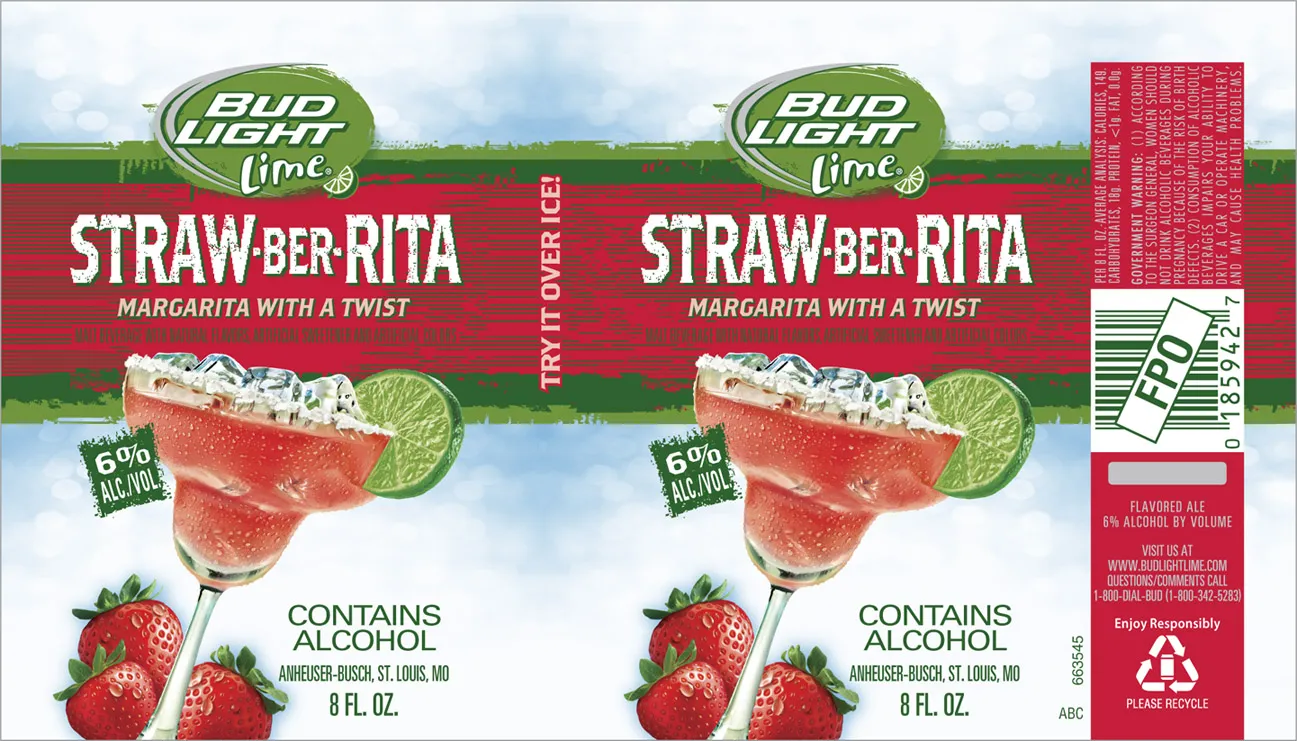
    The Bud Light Straw-Berry-Rita is an effective need for individuals who desire an energetic ready to drink cocktail and not the hassle of a blender or a professional bartender. The ancient crispness of a light lager-meets-the-full-bodied, fat flavor of a strawberry margarita, this is a brand of malt that has become a time-tested staple of pool parties, beach trips, and back yard parties. Differently put, it can offer a high-impact flavor profile that will bridge the gap between the traditional beer and a luxurious cocktail and will be guaranteed crowd-pleaser in any social setting in 

    General overview of the Ritas Portfolio.

    The Straw-Ber-Rita is part of the group of larger Ritas, which were in the shape of a smaller, on-the-go, margarita. The series was initially under the branding Bud Light but it was developed as a brand of flavored malt beverages. Last, but not the least, is that higher alcohol by volume (8% ABV) than the light beers is what makes these drinks have a stronger kick every time the drink is consumed. In addition, the malt base is well disguised with the strawberry flavors being used to provide a sweet and fruitful finish to the base. So it is the last solution to those who like taste and convenience in making the choice on the beverage.

    Art of the Ideal Serve.

    To complete the sweetness which is proven by Straw-Ber-Rita, it is practically obligatory to serve it at the proper temperature. These beverages are to be poured on the rocks i.e. chilled between 33 F and 35 F since the ABV and the higher level of sugar concentration may cause it to be too syrupy to the extent of warming. Moreover, the majority of fans also prefer pouring it over ice cubes or even shaking it over ice cubes with frozen strawberries so as to resemble the famous frozen margarita. In fact, fresh lime on the rim may be an acidic contrast, which slashes the initial sweetness. Consequently, how you serve it can contribute to the overall tasting experience.

    Packages Solutions to every occasion.

    The Straw-Ber-Rita is available in the broadest formats to suit the needs of the social setting. The 8oz Slim Can is a practical requirement to reduce the portions and keep the cans cool during hot weather, the 1oz and 25oz are popular in festivals and sporting events. Multi-packs are an excellent option to fill a cooler within a relatively limited time in larger parties. Also, the aluminum wrapping is durable thereby keeping the carbonation intact and avoiding light that destroys the taste of fruit drinks. In a nutshell, the Straw-Ber-Rita is lightweight and can be easily installed in any travelling cooler or a party spread.

    Flavour Characteristics and Components.

    The Straw-Ber-Rita is a success in that it is a sweet-and-tart flavor structure. It uses high quality malt base, which is filtered to a neutral point to make both the strawberry and the margarita-lime flavours come to the forefront. In addition, the carbonation provides the refreshment of a spritz to the drink, which does not make it too heavy on the palate. Even though it is a proven hit among the sweet tooth crowd, the citrus flavors provide a refreshing touch. In addition, it is a colorful red object, which can be used at feasts. Therefore, it is appealing to the eyes and the taste buds.

    Joint venture with Summer Foods.

    The operations of a balanced party food are the decisions on the appropriate food that is to be served with a Straw-Ber-Rita. The sweetness of the strawberry and the spicy foods such as jalape poppers, buffalo wings or spicy tacos are an ideal pairing and the sugar cancels out the spiciness. Furthermore, it also goes well with salty dishes like chips and salsa or hot nuts. To match it with a dessert, a fruit tart or vanilla bean ice cream would be a good match since it would be more inclined towards the treat element of the drink. It thus renders the Straw-Ber-Rita more flexible than a regular beer when it comes to the adventuresome food associations.

    High level: Rita Upgrades.

    It can serve as a great base to more elaborate drinks to people who desire to take the Straw-Ber-Rita experience to the next notch.

    The Berry Spritzer:

    Add 2 oz of club soda and  oz of Straw-Ber-Rita and then muddled kiwi and shaken ice to make it light and refreshing.

    The Spicy Rita:

    Toss one slice of jalape with fresh lime juice and pour over the Straw-Ber-Rita and ice and add a spicy sweet taste.

    The Fruit Punch:

    After adding pineapple pieces and blueberries to a large pitcher, your popular punch is made.

    FAQ Section

    Will Bud Light Straw-Ber-Rita be around in ?

    but even though branding has often been shifted off to avoid calling it Bud Light Lime Straw-Ber-Ita, but mere STRAW-BER-RITA, the fundamental recipe and flavor profile is still available in most mega-store chains. It is still a top seller in the flavored malt drink category with its trustworthiness and popular taste.

    How many Straw-Ber-Ritas?

    Most of the average Straw-Ber-Rita cans contain 8 per cent of ABV, far higher than 2 per cent of ABV in a normal Bud Light. A practical necessity exists of consuming these drinks in moderation and to note the higher alcohol content especially when outdoors in the sun.

    Does it contain real tequila?

    It is not an alcoholic cocktail, but a flavoured malt drink, the Straw-Ber-Rita. It is brewed like beer but passes through an intensive filtration process to create a neutral base, which is then infused with flavor in order to taste a margarita. This allows it to be sold in many locations that only sell beer and wine.

    How many calories is a Straw-Ber-Rita?

    A typical amount of 8 oz contains approximately 199 calories. It is a sweetened beverage and hence it is richer in calories than a regular light beer.

    Conclusion

    The Bud Light Straw-Ber-Rita is a proven convenience and taste hero that brings the flavor of professional cocktails in a convenient can. And knowing thus the practical necessity of serving it on ice and of the kind of food to accompany it you can make any party a party. Having a summer BBQ or just relaxing by the pool in , the hint of a strawberry and lime will be a refreshing and yet fulfilling alternative to beer. This colorful classic is another addition to your summer plans, so add this to your cooler. Put an end to the hassles of preparing cocktails with complex recipes and have the Straw-Ber-Rita bring the party to you today.

  • Bullet Lighters The Ultimate Guide to “Trench” Style Ignition.

    Bullet Lighters The Ultimate Guide to “Trench” Style Ignition.

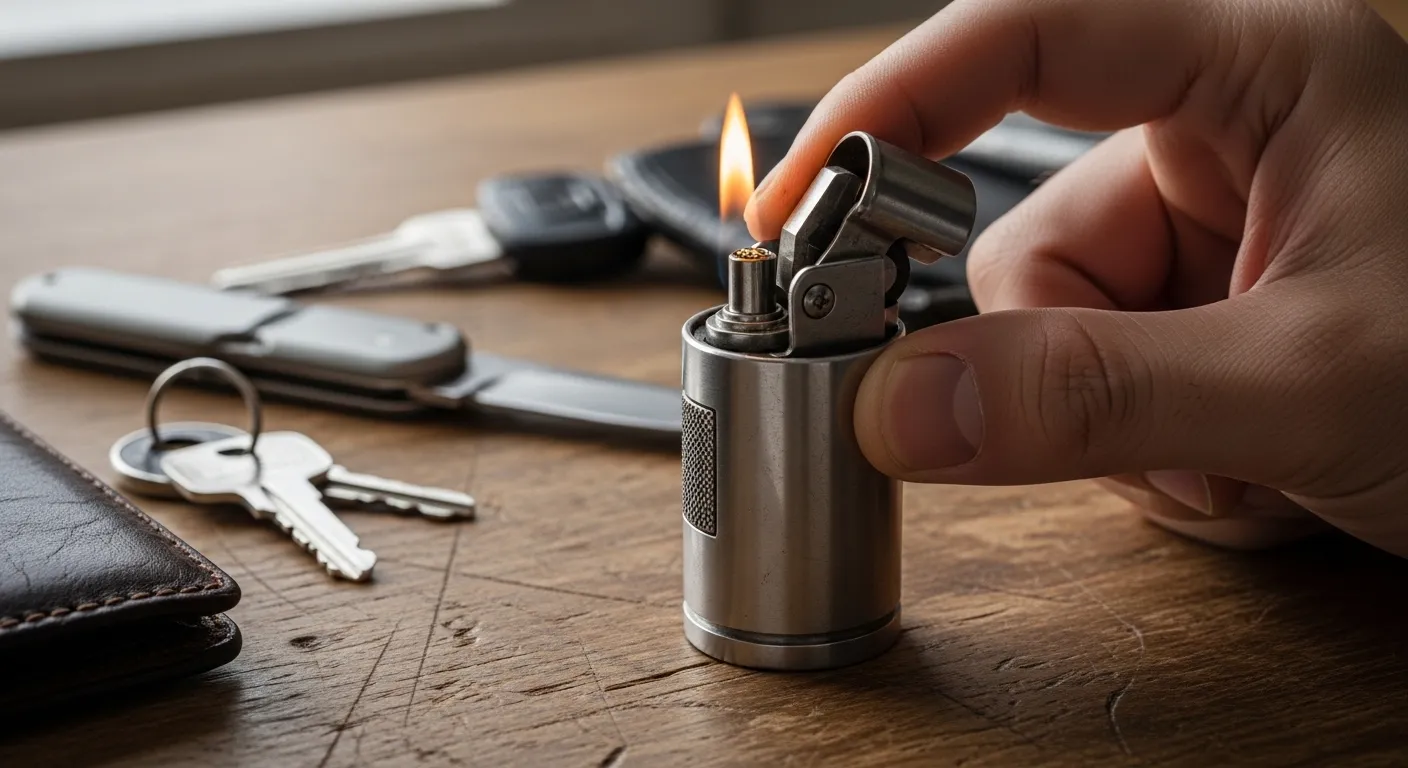
    Weighing 58 pounds with a bullet, a bullet lighter is a practical requirement of collectors, outdoorsmen and history lovers who admire the rugged and proven appearance of the classic trench lighter. These lighters, resembling a real ammunition, with sizes varying between a standard.223 round up to a colossal.50 caliber shell, are not only a novelty, but are designed to last and withstand the wind. Regardless of the type of vintage trench model or a modern butane variant, the bullet lighter is one of the most unusual tools in any everyday carry (EDC) kit.
    In a word, a bullet lighter is the ideal combination of military design and quality performance. This is a detailed manual on the history of the development of the so-called trench lighter, the various types of fuel used, and a step-by-step instructional guide on how to keep these special instruments in order and refilled.

     History of the “Trench” Bullet Lighter.

    The genesis of the bullet lighter is a tale of field-expedient engineering. World War I soldiers were presented with a practical need: they needed a lamp that would not blow out on a windy day and they needed a lamp that would not send a giant, position-exposing flare to the skies like a match.

    Makeshift Innovation:

    Enterprising soldiers started to make lighters out of empty shell cases of brass. They made a windproof, fuel-efficient device by stuffing the casing with cotton, putting in a wick, and a flint wheel.

    IMCO Legacy:

    In 1920, the Austrian firm IMCO started to make lighters out of empty cartridge cases in mass production. These designs which were proven were the standard of what is now known as the bullet lighter.

    Evolution to Novelty:

    Since the World Wars, the design has changed to more of a collector’s item and manufacturers have produced very detailed replicas of modern types of ammunition.

     Bullet Lighters: Fuel, Ignition.

    The bullet lighters in the year  are typically classified according to the kind of fuel they utilize. Selecting the appropriate one is a practical option based on your preference of a vintage or a convenient one.

    The Petrol Bullet Lighter (Vintage Aesthetic)

    These are filled with a reservoir of cotton dipped in lighter fluid. They are tested to be reliable in cold weather and that they can remain lit without the need to press a button. But in the event that the cap is not airtight, the fluid will be able to evaporate in the long run.

    Butane Bullet Lighter (Modern Convenience).

    Contemporary counterparts tend to employ pressurized butane. These are both a utilitarian need of those who desire a torch flame that is very wind-resistant and has none of the recognizable odor of lighter fluid. They can also be refilled much easier by way of a bottom valve.

     Refill and maintenance of a Bullet Lighter.

    The key to a proven life span of 10 or more years is proper maintenance. Since the bullet lighters are made of small and specialized parts, it is important to adhere to a protocol.

    To refill a Petrol/Fluid Lighter:

    Empty the bullet: In the majority of bullet lighters there is an internal component (cap) that slides out of the shell.
    Lift the Felt: This is achieved by lifting the pad at the bottom of the insert.
    Drip Lighter Fluid on the Cotton: Wet the Cotton: Drip lighter fluid on the cotton until saturated but not dripping.
    Replace and Wipe: Slide the insert back into the shell and wipe the outside of the lighter. It is a practical necessity–it is a great danger to light a lighter that is smeared with some fluid.

    To refill a Butane Lighter:

    Purge the Air: Press the bottom refill valve with a small tool. The trapped air should be bled out as it is a functional requirement to have a full tank of gas.
    Invert and Press: Have the butane can and the lighter inverted. Insert the nozzle in the valve with 3-second bursts.
    Wait till Stabilized: Let the lighter rest 5 minutes to become room temperature when striking.

     Major Characteristics to consider.

    O-Ring Seals:

    A good bullet lighter must have an O-ring of rubber between the body and the cap. This avoids evaporation of fuel, the number one failure mode of elderly-style lighters.

    Material:

    Find Solid Brass or Stainless Steel. Zinc alloy models are less expensive, however, may pit or corrode over time with exposure to pocket sweat or humidity.

    The “Chimney” Design:

    This is an established windproof design that involves use of a holed chimney cap that shields the flame against wind but allows oxygen to supply the fire.

     Deep-Dive FAQ: Higher Level Troubleshooting.

    Q: Why will my bullet lighter not light?

    A: Presumably your flint is reduced to a mere “stub,” or to dust. To replace the spring, unscrew the spring-loaded screw on the bottom of the insert, put in a new flint and screw it back in. It is a 30-second solution that brings the lighter back to the state of like-new.

    Q: Two days to evaporate my lighter fluid. What’s wrong?

    A: Inspect O-ring. In case the rubber is fractured or lost, the fluid will leak out. The replacement O-rings are available in the hardware stores. Alternatively, screw the cap on firmly; a loose cap is an effective requirement of evaporation to take place.

    Q: Can bullet lighters be boarded on an airplane?

    A: TSA rules tend to ban lighters that resemble real ammunition in carry-on luggage in  The rule of a realistic replica may be applicable even in the case of an empty one. The best practice that is proven is to pack them in the checked luggage (without fuel) to avoid being confiscated.

    Q: What do I do to change the wick?

    A: Pull the old wick out through the chimney with a needle-nose pliers. When it is only scalded on the top, you can just scrap up an inch/ 4/ quarter and cut off the burnt. Should you require the complete replacement then you have to take out all the cotton on the inside, pass the new wick through and then you have to snake the cotton back around it.

     Comparisons: Bullet Lighter vs. ZippoConclusion

    FeatureBullet LighterClassic Zippo
    PortabilitySlim, fits on a keychainBoxy, fits in a watch pocket
    Fuel SecuritySuperior (Screw-on cap)Average (Friction lid)
    DurabilityHeavy-duty shellHinges can become loose
    Ease of UseRequires two hands to openIconic one-handed “flick”

    Bullet lighter is a time tested instrument that combines the past and the present. Knowing the practical need of frequent maintenance, e.g. a check of the O-rings and emptying the butane tanks, you can enjoy your lighter as a helpful partner over the years. It could be a replica of the brass trench lighter or a high-powered butane torch, it is not just a conversation starter, the bullet lighter is a long-lasting, windproof, and waterproof weapon that has the reputation of being tested in the field. In simple terms, a bullet lighter is something you will need to add to your collection, in case you appreciate the beauty of ruggedness and classic style. Stop using weak plastic lighters that break easily and have a tool that is well constructed. Now, it is time to explore the next level and discover the caliber that suits you in the present.

  • Bud Light Keg Ultimate  Party Planning and Maintenance Guide.

    Bud Light Keg Ultimate  Party Planning and Maintenance Guide.

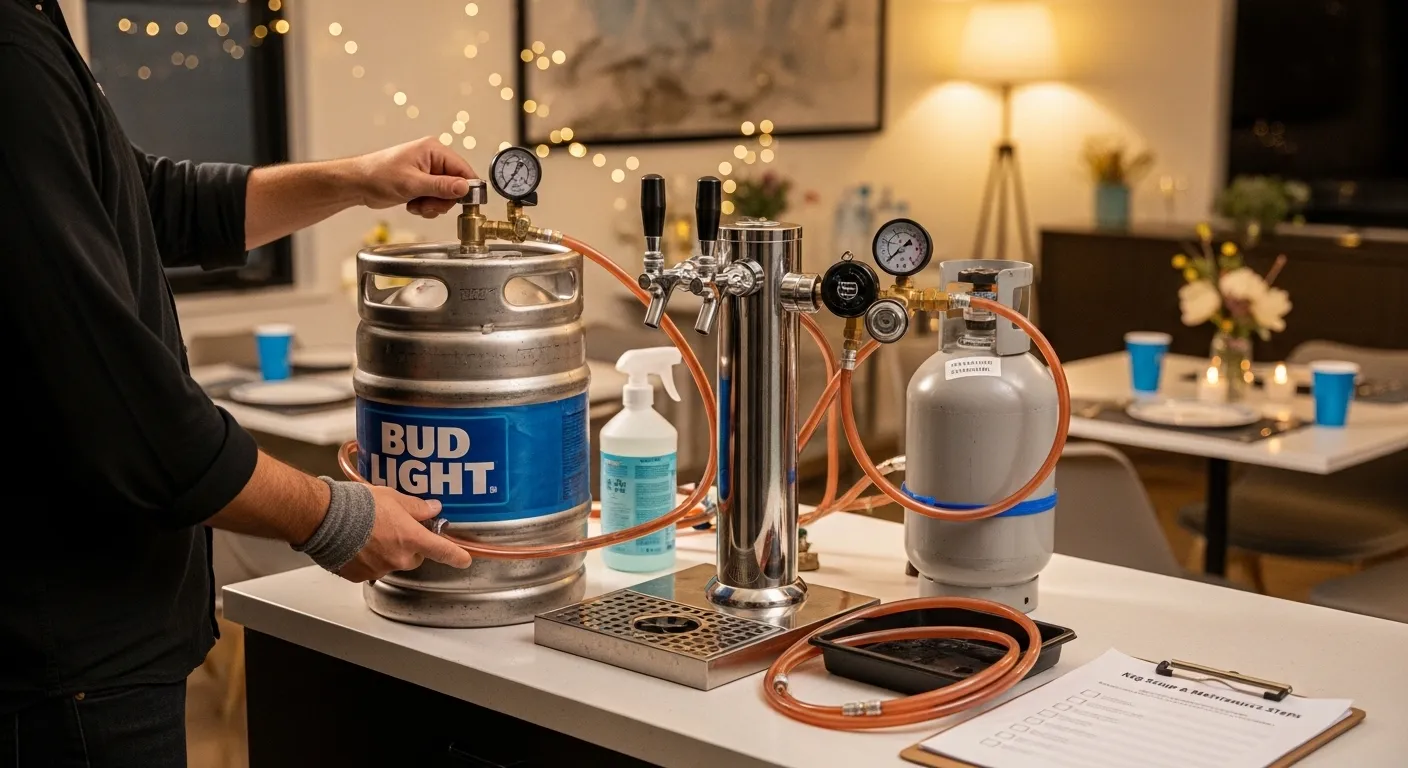
    A Bud Light Keg is a handy requirement in your planning of a big party, whether it is your back yard barbecues, or game day partying. Bud Light being a brand that is well established within the light lager segment, its clean and crisp profile has a broad appeal to guests. That you are not filling dozens of cans or bottles makes you feel that the use of a keg is a waste-saving, you do not have to fill dozens of recycling bins with it, and you also have an excellent draft experience, which is inaccessible with single containers.

    In simple terms, any working center of a party is an adequately regulated keg. In  your Bud Light will stream at the correct temperature at a push of a button when you mix a smart kegerator and enhanced cold-chain logistical plan. This manual references all the technical details, such as volume calculation and tapping instructions, long-term storage, and troubleshooting.

     Dive Deep into Bud Light Keg Sizes, Keg Volumes.

    Keg TypeCommon NameGallonsLiters12oz PoursTotal Weight
    Half BarrelFull Keg1557~1510 lbs
    Quarter BarrelPony / Stubby7523~8287 lbs
    Slim QuarterTall Quarter7523~8287 lbs
    Sixth BarrelSixtel / Log115~5558 lbs

    The appropriate size choice is a reasonable one so that there is no lack of refreshments and wastage of plenty of surplus beer.The Half Barrel (Full Keg).

    The Half Barrel is the standard of high volume events in the business. It is the most affordable means of nourishing a multitude in  This is the right amount in relation to a group of 40-50 people so that everybody will have an opportunity to drink 3-4 drinks at the party.

    Pony and Slim Quarter.

    The Middle-ground is the Quarter Barrel. The Stubby Quarter is an experimental size of the standard ice tubs that are shorter and wider and the Slim Quarter is smaller and with a smaller diameter so that you can stack two of them in a regular dual-tap kegerator.

    The Sixtel (Sixth Barrel)?

    The Sixth Barrel is a viable requirement of small or intimate bars in the home or at the bars with limited space. It is the smallest size that can be carried and transported by itself because it is almost as high as a full keg but is significantly slimmer.

     Perfect Pour Science: Pressure and Temperature.

    Only under a nurturing atmosphere will your Bud Light be superb. Otherwise, it will result in foamy beer or one dimensional, one dimensional taste.

    The 38°F Rule

    Bud light is a very carbonated lager that is therefore very sensitive to temperature. There is a pre-programmed tested target temperature to be served at 38 F (3 C).

    The Danger Zone: CO2 will be evaporated out of the liquid when the temperature of the keg exceeds 40 F. This results in too much foam in the tap.

    Freeze Zone: Once the temperature of the keg falls below 28 o C the beer can is partially frozen and appears hazy and has a grey taste spectrum.

    Pressure Management (PSI)

    In case you are using a CO2 system, you will need to adjust your regulator to 10-12 PSI, a typical keg of Bud Light. A Bud Light Preset will also be available in  to many luxury regulators that will take into account the exact amount of carbonation that Anheuser-Busch prefers.

     Tapping Procedures: Sankey “D” Coupler.

    All Bud Light kegs use the Sankey D-System Coupler which is the standard of beers in North America. Proper tapping is an operating requirement to ensure that the contents do not leak and the device does not spray internally.

    Step-by-Step Tapping Guide:

    Let the Keg Settle: Allow the keg to settle freely at least 2 hours after it is shipped. Shaking or bouncing a keg mixes it thoroughly and the CO2 is an old-time-tested formula to pour it out too fast a face-ful of foam.

    Wipe the Dust: Clean and wipe the top of the keg valve with a clean and wet towel.

    Turn on the Lugs: The coupler handle has to be in the Up (Off) position. Make sure that the two metal lugs of the coupler have moved in the grooves of the keg valve.

    Twist and Lock: Turn the coupler 90 clockwise, until it clips.

    Action: Pull out handle (when lever type) and push down until it clicks. As the gas passes into the keg it makes a hissing sound.

     Replacement of Dispensing: Picnic Pump and CO2 System.

    Depending on the hardware you used, the time your Bud Light would be drinkable would be varying.

    The Manual Picnic Pump (Party Pump)

    The principle of working: It forces out the beer through the air in the atmosphere.

    Shelf Life: 8-12 Hours. The Reality: Since the air contains oxygen, the beer will start oxidizing (taste like wet cardboard) and will flatten almost instantly. Keg is to be imbibed that night but a picnic pump is a handy supply of a day long fete.

    The CO2 Pressurized System ( Kegerator ).

    Mechanism: It is carried out with pure CO2 gas to ensure that the pressure is kept stable and that oxygen is not allowed to enter.

    Shelf Life: 45 to 0 Days.

    The Reality: This is the so-called, tried and tested way of home bars. The final glass will be as new as the original one as long as the temperature (38 o C) and the pressure of the CO2 remain the same.

      Pricing and Logistics

    By  the market will be pricing a Bud Light keg, but the list below of prices is likely to be available (no refundable deposit):

    Half Barrel: 140.00 – 1800
    Quarter Barrel: 800 – 100
    Sixth Barrel: 00 – 80.00

    The Deposit System

    The stainless steel shell is leased with your keg. This will also require you to deposit some Keg Deposit (3050 is average) and Tap Deposit (when renting a pump). These are refundable as long as you hand in the equipment in good conditions. In order to go through the hassle free refund process, you need to have your receipt.

     Long FAQ: Guru trouble shooting.

    Q: Why is my beer 100% foam?
    A: This is normally due to one of the three following reasons: the keg is too hot (over 40 o F), the pressure is too great (over 14 PSI) or the line of beer has been pinched or contaminated. The first, is to test your quantity of ice–unless the keg is hot no quantity of pressure will put the foam in its place.

    Q What will I do to keep a keg cool without a kegerator?
    A: Large plastic bag. Insert the keg and ice and some water around it. Pro Tip: To make the ice lower its freezing point will stretch the ice, thus keeping the keg colder by adding a little rock salt to the ice water.

    Q: Does the keg fit on its side to carry it?
    A: It can be done in short distances and it is an administrative requirement to carry and hold the keg erect. When you are, however, at length reached by the traveler, the CO2 and the sediment are stirred up, and a much longer time is thrown away in settling it down (4+ hours).

    Bud Light: Is it rotten hot, and cold, and hot?
    A: even though light causes skunking, rather than temperature changes, the flavor can be reduced over time in case of repetitive repetition of hot and cold during cycling. Achieving the same temperature of the keg upon picking it up, and when empty is one of the best practices that have been proven.

    Q: What will tell me when the keg is full?
    A: To knock the keg over or kick it is the surest low-tech method. When it gets to the daytime and the beer is sloshing like a breeze, then you are nearly over the finish line. Certain smart-keg scales () are also capable of delivering the number of ounces left by a digital response through a smartphone app.

     Safety and Handling Checklist.

    Lifting: A half-barrel is 10 lbs. Take it not yourself. Two person carrier: a hand truck.
    CO2 Safety: When using a pressurized system in a small room or basement, it is necessary to have a CO2 monitor. The suffocation can be an established danger of a leakage of confined spaces.
    Cleanliness: Keep clean between kegs and your lines of beer. There is still a possibility of old beer bacteria still being there and souring the taste of the new Bud Light keg.

    Conclusion

    The last hugging-efficiency trade-off to social hosting is a Bud Light keg. Understanding what it takes in practice to reach that temperature control, understanding the mechanics of the Sankey D-coupler and how to select the appropriate dispensing system to fit your schedule will guarantee that all your guests will have the experience of a time tested professional level. The keg party tradition that was introduced in the  has been enhanced through a use of more powerful technology but the idea is similar: cool it, pressurize it and flow it. The second step that you should undertake in event planning is to ensure that you have the appropriate amount of people and that you have your cooling station prepared. You no longer have to go to the trouble of carrying out the personal cans- imbibing the fresh, draft Bud Light at your next large party.

  • Bike Rim Lights The Pure Night Safety Solution.

    Bike Rim Lights The Pure Night Safety Solution.

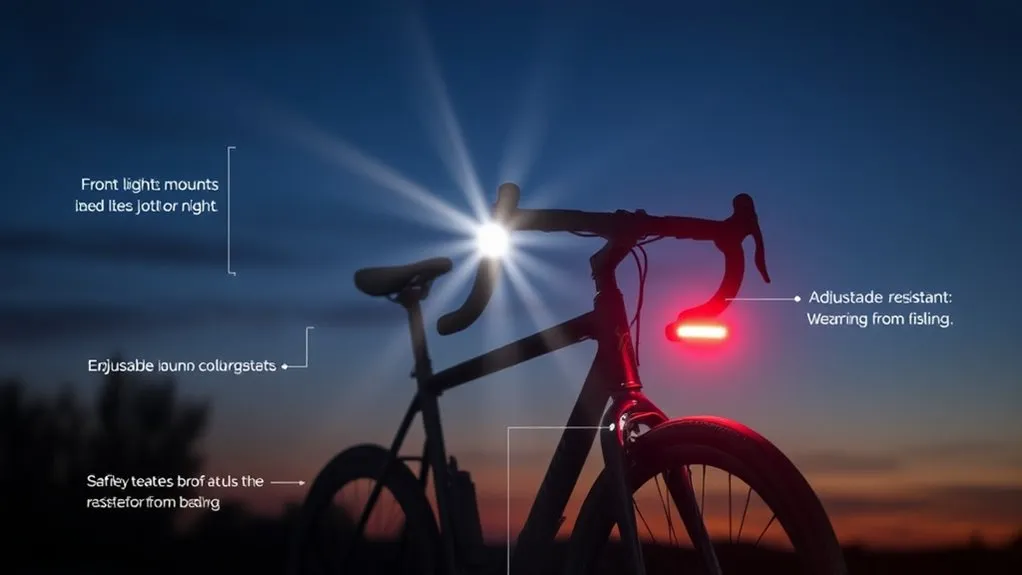
    Bike rim lights are a convenient requirement of the urban bikers, commuters and night riders since they want to make the most of their side-profile visibility. Though front and rear lights are essential to visibility and be visible to the rear, in most situations, they create a blind spot to the oncoming traffic on one side of an intersection. Rim lights create a large motion picture that drivers cannot disregard as the wheels rotating are illuminated. Rim lights, in short, transform your bike into a 30 degree safety style symbol, at a price.

    Overall introduction to Bike Rim Light Systems.

    The market of bike wheel lights has turned to be divided into two large branches, namely: LED Strand Lights and Programmable Spoke Lights. LED strands tend to be constructed using a thin, flexible wire that you can wrap over the spokes or the interior of the rim so as to create the illusion of a continuous halo of light. The programmable spoke lights on the other hand utilize high-speed LED bars mounted on the spokes and persistence of vision (POV) used to display intricate pattern, text or animation as the wheel rotates. Most importantly, modern systems are battery-powered (USB rechargeable or coin cell) and able to survive the vibration, rain and mud of daily cycling. Therefore, they are the last upgrade of any rider who desires to have high-quality aesthetics yet still has the so-called proven visibility.

    Halo Effect LED Strand lights.

    LED strand lights such as those of famous brands such as WheelBrightz are the most popular lights among recreational riders. These kits consist of an LED strand that is weatherproof and a small battery pack, which is attached to the hub of the wheel. In addition, the uniform light distribution on the rim enables it to provide a constant light during low speeds. It is an urban necessity to be applied in cities where there is a lot of stop and go traffic. In fact, majority riders are choosing to use color like Neon Green or Electric Blue so that they can have their identity on the bike. Consequently, strand lights offer a cheap, simple, way of creating high-impact visibility.

    POV Lights: High-speed POV Visuals Programmable P.O.V. Lights.

    The POV lights that can be programmed are an engineering wonder to those who want to make their wheels a computer screen. These bars contain a row of LEDs that blink at extremely fast rates; as the wheel rotates your eyes sew these pulses together to create a solid image or animation. Moreover, they also have software allowing you to add your custom GIFs, logos or patters. It must be noted though that the effects may be most evident with speeds surpassing 10-15 mph. Therefore, they are good with group riders, festivals and high speed commuters who would like to make a bold statement on the road.

    Weight and Balance: Hub-Mount Strategy.

    Wheel balance is one of the functional requirements of a rim light system. A huge battery pack when attached near the rim could create a wobble effect when riding fast, this is not safe to the rider. Most professional quality rim lights incorporate a hub-mount battery pack and the weight is centred around the axis of the wheel. This will ensure that centrifugal force is well distributed and does not affect the bike handling. In addition, placing the weight at the hub cushions the battery against the strong hits which are felt by the side of the tire. That is, it would be fair to say that a hub-mounted system is one of the characteristics of an adequately-designed wheel light.

    Weatherproofing and Durability Standards.

    Water, road salt and debris always get in contact with bike wheels and therefore rim lights must have a high ingress protection (IP) rating. Identify kits with IP5 or IP7 or higher rating, which implies that they are able to resist heavy rains and puddles. Besides the LED strands are usually encased in a thick and pliable silicone tubing that cannot allow the wires to break due to vibrations of the road at any given time. This is an established fact that year-round commuters cannot do without, as they have to ride through the winter slush or spring rain. As a result, you will be sure that your lights will not darken regardless of the weather conditions.

    Power Management of Battery Life.

    Most bike rim lights have high efficiency LED that can take up to 20-40 hours on a single battery pack. The majority of more recent designs have switched to USB-C rechargeable internal batteries, which eliminate the waste and cost of disposable AAAs. Also, some of the higher-end models have an inbuilt auto-off sensor that will switch off after three minutes to conserve energy enabling you to ride once more. This would be convenient to the forgetful riders, who would otherwise charge their batteries in the garage overnight. Thus it has now been easier and cheaper to keep your wheels shining than ever before.

    Installation Hints to a Clean Finish.

    The most significant one is installation to achieve a professional outlook and upkeep of a safe system.

    Tension is key: LED strands When installing LED strands, take care to ensure that the wire does not stretch; have clear zip ties present at every third or fourth spoke to ensure that the wire is not hanging into the brake pads.

    Hub Security: The battery pack should be attached to the hub using the rubber shims in order to prevent the battery pack dropping or rattling around.

    Check: After installing, rotate the wheel slowly to ensure that the lights do not interfere with the frame, fork, or fenders.

    These measures will ensure that your lights will not tip even on the ruggedest urban places.

    FAQ Section

    Will rim lights be a heavy addition to my wheel?

    The average LED rim light kit costs between 50g-150g. When mounted in the hub this weight is virtually imperceptible to the average rider. Professional road racers might not require the extra grams, but to the 99% of riders whose main concern is safety and appearance, the extra weight is a small price to pay to achieve the side view that is increased a thousand times.

    Are they road legal lights?

    Bike rim lights are in most jurisdictions entirely legal and in reality they are even encouraged by safety organizations. However, in some jurisdictions, laws exist regarding the use of flashing blue or red lights in order not to be confused with emergency vehicles. It is always a best practice, to use steady-on colors or neutral colors like white, amber or green, just in case you are not sure of the local regulations.

    Can rim lights be used with rim brakes?

    Yes, though, care should be taken when fitting. The light strand should not be pulled around the rim on the flat braking surface but rather on the valley of the rim. The first time that the light wire gets into contact with the braking track it is destroyed and might even cause loss of braking power. This is a far easier installation when you have disc brakes, as the entire rim surface is available as a source of lighting.

    What do I do to wash my bike with the lights?

    Washing your bike is as simple as washing any other bike with soft brush and hose. The battery pack and the LED connections should not be subjected to a high-pressure power washer because the high pressure can cause the water to go through the seals. All that is customarily needed is a wipe-down with a wet cloth to keep the LED tubing clean with road grime and to make the brightest as possible.

    Conclusion

    The best combination of both safety and art is bike rim lights. When you turn your wheels into spinning rings of light, you can give the worst of the exposure to night cycling ride: side-on collisions. Whether it is simple, elegant glow, state of the art programmable display, you are investing in a proven solution that will make the road safer to everyone. The usefulness of visibility is not stressed in our busy and modern streets. In short, rim lights will give you confidence to ride the night and ride without any fear. Behind you, leave all your fears of being seen, and see your wheels shine to-day, with a beautiful, 30/degree/glow, costing 30.

    Bike Rim Lights The Pure Night Safety Solution.

    Bike rim lights are a convenient requirement of the urban bikers, commuters and night riders since they want to make the most of their side-profile visibility. Though front and rear lights are essential to visibility and be visible to the rear, in most situations, they create a blind spot to the oncoming traffic on one side of an intersection. Rim lights create a large motion picture that drivers cannot disregard as the wheels rotating are illuminated. Rim lights, in short, transform your bike into a 30 degree safety style symbol, at a price.

    Overall introduction to Bike Rim Light Systems.

    The market of bike wheel lights has turned to be divided into two large branches, namely: LED Strand Lights and Programmable Spoke Lights. LED strands tend to be constructed using a thin, flexible wire that you can wrap over the spokes or the interior of the rim so as to create the illusion of a continuous halo of light. The programmable spoke lights on the other hand utilize high-speed LED bars mounted on the spokes and persistence of vision (POV) used to display intricate pattern, text or animation as the wheel rotates. Most importantly, modern systems are battery-powered (USB rechargeable or coin cell) and able to survive the vibration, rain and mud of daily cycling. Therefore, they are the last upgrade of any rider who desires to have high-quality aesthetics yet still has the so-called proven visibility.

    Halo Effect LED Strand lights.

    LED strand lights such as those of famous brands such as WheelBrightz are the most popular lights among recreational riders. These kits consist of an LED strand that is weatherproof and a small battery pack, which is attached to the hub of the wheel. In addition, the uniform light distribution on the rim enables it to provide a constant light during low speeds. It is an urban necessity to be applied in cities where there is a lot of stop and go traffic. In fact, majority riders are choosing to use color like Neon Green or Electric Blue so that they can have their identity on the bike. Consequently, strand lights offer a cheap, simple, way of creating high-impact visibility.

    POV Lights: High-speed POV Visuals Programmable P.O.V. Lights.

    The POV lights that can be programmed are an engineering wonder to those who want to make their wheels a computer screen. These bars contain a row of LEDs that blink at extremely fast rates; as the wheel rotates your eyes sew these pulses together to create a solid image or animation. Moreover, they also have software allowing you to add your custom GIFs, logos or patters. It must be noted though that the effects may be most evident with speeds surpassing 10-15 mph. Therefore, they are good with group riders, festivals and high speed commuters who would like to make a bold statement on the road.

    Weight and Balance: Hub-Mount Strategy.

    Wheel balance is one of the functional requirements of a rim light system. A huge battery pack when attached near the rim could create a wobble effect when riding fast, this is not safe to the rider. Most professional quality rim lights incorporate a hub-mount battery pack and the weight is centred around the axis of the wheel. This will ensure that centrifugal force is well distributed and does not affect the bike handling. In addition, placing the weight at the hub cushions the battery against the strong hits which are felt by the side of the tire. That is, it would be fair to say that a hub-mounted system is one of the characteristics of an adequately-designed wheel light.

    Weatherproofing and Durability Standards.

    Water, road salt and debris always get in contact with bike wheels and therefore rim lights must have a high ingress protection (IP) rating. Identify kits with IP5 or IP7 or higher rating, which implies that they are able to resist heavy rains and puddles. Besides the LED strands are usually encased in a thick and pliable silicone tubing that cannot allow the wires to break due to vibrations of the road at any given time. This is an established fact that year-round commuters cannot do without, as they have to ride through the winter slush or spring rain. As a result, you will be sure that your lights will not darken regardless of the weather conditions.

    Power Management of Battery Life.

    Most bike rim lights have high efficiency LED that can take up to 20-40 hours on a single battery pack. The majority of more recent designs have switched to USB-C rechargeable internal batteries, which eliminate the waste and cost of disposable AAAs. Also, some of the higher-end models have an inbuilt auto-off sensor that will switch off after three minutes to conserve energy enabling you to ride once more. This would be convenient to the forgetful riders, who would otherwise charge their batteries in the garage overnight. Thus it has now been easier and cheaper to keep your wheels shining than ever before.

    Installation Hints to a Clean Finish.

    The most significant one is installation to achieve a professional outlook and upkeep of a safe system.

    Tension is key: LED strands When installing LED strands, take care to ensure that the wire does not stretch; have clear zip ties present at every third or fourth spoke to ensure that the wire is not hanging into the brake pads.

    Hub Security: The battery pack should be attached to the hub using the rubber shims in order to prevent the battery pack dropping or rattling around.

    Check: After installing, rotate the wheel slowly to ensure that the lights do not interfere with the frame, fork, or fenders.

    These measures will ensure that your lights will not tip even on the ruggedest urban places.

    FAQ Section

    Will rim lights be a heavy addition to my wheel?

    The average LED rim light kit costs between 50g-150g. When mounted in the hub this weight is virtually imperceptible to the average rider. Professional road racers might not require the extra grams, but to the 99% of riders whose main concern is safety and appearance, the extra weight is a small price to pay to achieve the side view that is increased a thousand times.

    Are they road legal lights?

    Bike rim lights are in most jurisdictions entirely legal and in reality they are even encouraged by safety organizations. However, in some jurisdictions, laws exist regarding the use of flashing blue or red lights in order not to be confused with emergency vehicles. It is always a best practice, to use steady-on colors or neutral colors like white, amber or green, just in case you are not sure of the local regulations.

    Can rim lights be used with rim brakes?

    Yes, though, care should be taken when fitting. The light strand should not be pulled around the rim on the flat braking surface but rather on the valley of the rim. The first time that the light wire gets into contact with the braking track it is destroyed and might even cause loss of braking power. This is a far easier installation when you have disc brakes, as the entire rim surface is available as a source of lighting.

    What do I do to wash my bike with the lights?

    Washing your bike is as simple as washing any other bike with soft brush and hose. The battery pack and the LED connections should not be subjected to a high-pressure power washer because the high pressure can cause the water to go through the seals. All that is customarily needed is a wipe-down with a wet cloth to keep the LED tubing clean with road grime and to make the brightest as possible.

    Conclusion

    The best combination of both safety and art is bike rim lights. When you turn your wheels into spinning rings of light, you can give the worst of the exposure to night cycling ride: side-on collisions. Whether it is simple, elegant glow, state of the art programmable display, you are investing in a proven solution that will make the road safer to everyone. The usefulness of visibility is not stressed in our busy and modern streets. In short, rim lights will give you confidence to ride the night and ride without any fear. Behind you, leave all your fears of being seen, and see your wheels shine to-day, with a beautiful, 30/degree/glow, costing 30.

  • Austere Airfield Lights – The Remote Operations Practical Need.

    Austere Airfield Lights – The Remote Operations Practical Need.

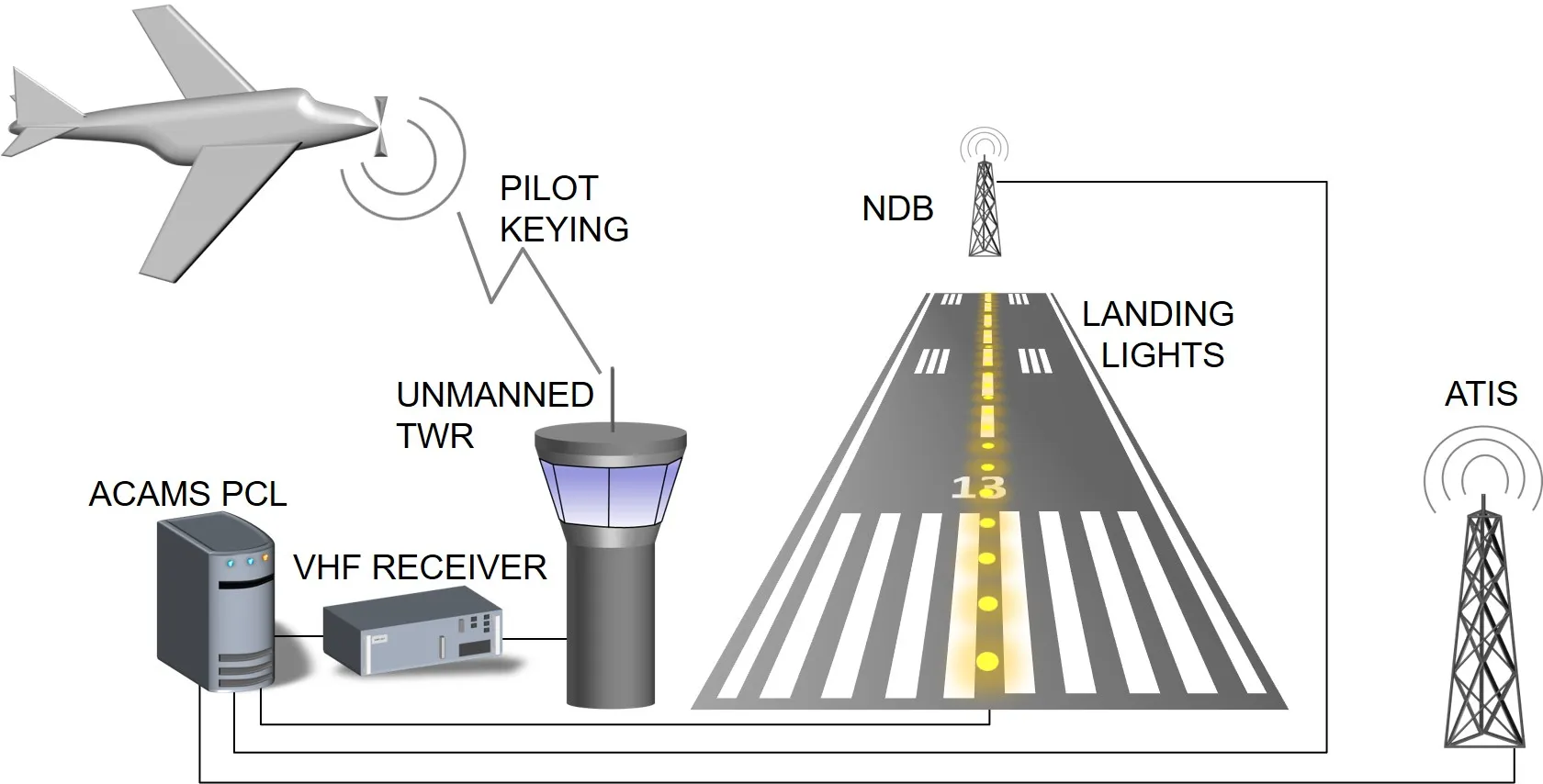
    Austere is a condition in terms of expeditionary logistics and emergency response, where there is no infrastructure: no hangars, no standard electricity, and no marked runways. In this case, there is an operative requirement of austere airfield lighting systems. These are rapid and special lighting kits that can allow the planes to land safely in the remote deserts, jungle clearings or disaster regions. The austere lighting of modern times (as opposed to the old-fashioned runway lights which require miles of underground cable and hardened power grids) can be portable, battery-operated and installed in only a few minutes.

    General Introduction: What Does it take to be an Austere Airfield?

    A bare base operation simply is an austere airfield. It may be an unsanitary, rocky or temporary road, and must be converted into a functioning runway capable of receiving cargo aircraft or helicopters in a few hours. The lighting installation here must be contrary to a normal commercial airport installation. It is not a redress, but an expediency. Reliability- the lights go dead, the mission is over is the absolute priority. Therefore, they are built to withstand excessive heat and extreme cold, sand, water and the high impulse of jet engines and at the same time easy to install by hand as a small crew.

    The key Features of Expeditionary Airfield Lighting.

     Rapid Deployment & Portability

    The standout characteristic of the austere lights is the fact that they are man-portable. These are typically ruggedized transport packages that can be carried on a utility vehicle or even in the tail of a small aircraft. Two or three persons can light a standard length runway within less than 30 minutes. This is a functional requirement of fast response operations in which the ability to provide a landing zone (LZ) on demand can be the difference between a successful and unsuccessful operation.

     Autonomous Power (Solar and Battery)

    Such lights are almost always self-contained as there is no grid. They employ high capacity nickel-metal hydride or lithium batteries that are rechargeable. Present kits are mostly solar-integrated i.e. the lights can be charged during the day and then can be used during the night without any human intervention. This feature of set-it-and-then is critical in long-term operations with skinny logistics chains, and fuel constraints.

     NVIS (Night Vision Imaging System) Compatibility.

    Plain visible white lights are a security threat in the case of military and tactical operations. Austere systems can frequently be NVIS-compatible, i.e. they emit infrared (IR) light that can be seen by pilots with night vision goggles, but not by people on the ground. This provides the capability of undertaking clandestine missions and at the same time provides the pilots with a clear view of a glide path to the ground.

     Remote & Secure Control

    Newer models have wireless remote control encrypted. A ground controller can be localized in a hardened shelter or a vehicle nearby and with a button press can be able to control the lights of the entire runaway. They can regulate the amount of light (to not impair the night vision of the pilot) or play strobe effects to locate something or just switch the lights off as soon as the threat requires to be identified.

    The Austere Lighting has Strategic Significance.

    Disaster Relief

    The portable lights can also be used in cases of earthquakes or floods when infrastructure has been swept away and the aid planes can land the important supplies in the centre of the crisis area.

    Special Operations

    In remote locations, small units use these lights to establish temporary forward operating bases (FOBs) that can be re-established with the tactical situation.

    Commercial Remote Logistics

    They are typical in mining and distant research missions to build landing strips onto which the supply airplane can land in areas hundreds of miles distant where there is no grid power.

    FAQ Section

    How are these lights suspended?

    with austerate environment you have no time to always mount lights on concrete. These kits can include stackable heavy foundations, or spike- anchor designs that can be plowed in the ground in dirt, sand, or gravel. The bases are supposed to be cutable – in case a plane or other vehicle is unfortunate to run over one of them, the light is supposed to come off instead of ripping off the landing gear of the aircraft.

    How long do they work with a single charge?

    An austere lighting system of good quality is designed to provide all night light, typically 8 -12 hours of light on one charge. The majority of the systems are smart-programmed; they may be programmed to operate at less intensity when no airplane has been detected and to automatically switch to full intensity upon the start of a landing or an action of launching a take off.

    Are they jet blast resistant?

    Yes. These lights are made to withstand jet engine wash wind and heat. They are usually produced with high impact UV-stabilized polycarbonate lenses, metal or reinforced plastic housings that are corrosive-resistant. They are put through the test to ensure that they do not melt or blow away during the take off roll by heavy cargo aircrafts.

    Could there be one controller who is in charge of the whole runway?

    Absolutely. The systems are based on a mesh network or long-range encrypted radio frequency (RF) to offer a connection between all the lights in the array to a single master controller. This ensures that your flick of the switch of Runway Lights to On will be followed by a very well coordinated pattern of the entire strip being lit up.

    Conclusion

    Austere airfield lighting is the now unsung hero of distant logistics. It links the world of the present which is very interconnected and the fringes of civilization. These systems can provide a portable, rugged and reliable way of marking a landing strip and therefore it is ensured that the aircrafts will be in a position to reach those locations that will require them most regardless of the nature of the terrain and the current infrastructure. They are an operational need of the military as well as the humanitarian and commercial operations. That a piece of dirt can be turned into a safe place to land, is not merely the accomplishment of technology, but it is a life life-line in a world that is no longer predictable.

  • ASAHOM Permanent Outdoor lights the ultimate guide 

    ASAHOM Permanent Outdoor lights the ultimate guide 

    ASAHOM has established itself in  as the pioneer in providing an alternative to mainstream brands like Govee by offering a product that is a pro-sumer offering. ASAHOM bridges the gap between simple DIY systems and professional systems by offering the need of a more practical solution, that is, the high-output and reliable lighting system, which works with open-source ecosystems. You can either have the high-brightness S1080 Pro or the next generation, multi-layered S1090 Elite, the lighting systems of ASAHOM will make you make the face of your home a versatile architectural wonder.

    It is a complete manual to the technical specifics, installation peculiarities and advanced AI-based features that could help make ASAHOM a recognized leader on the permanent outdoor lighting market.

      ASAHOM Series Breakdown.

    FeatureS1070 (Basic)S1080 (Pro)S1090 (Elite)
    LED TechnologyRGBCW (5-in-1)RGBCW (5-in-1)RGBCW (High-Density)
    Brightness (Lumen/Light)37 Lumens70 Lumens90+ Lumens
    Light PatternClassic CrestEnhanced CrestCrest + Pillar
    Control LogicApp OnlyIntegrated WLEDIntegrated WLED + AI
    Ideal UseDaily AmbianceFacade AccentsImmersive Display

    ASAHOM will have reduced its product line to three levels by the beginning of  Each of them is meant to possess some sort of visual impact and control.The S1080 Pro: The Pro Standard.

    The S1080 Pro: The Pro Standard.

    The flagship model, which the majority of the homeowners would prefer, is the S1080 Pro. Its visual effect on facades and eaves, proved to be 70 lumens per light, is much more impactful than entry-level models. Its greatest feature is Native WLED Integration that allows users to tap into the open-source WLED community that offers hundreds of unique presets and local control with platforms like Home Assistant.

    S1090 Elite: The New Depth Age.

    The lighting pattern that will be released with the S1090 (end of ) is Crest + Pillar. This projects a wide crest onto the roofline and at the same time throwing a column of light down the wall, vertically, to produce a layered, immersive effect that previously only professional grade wash lights could produce.

     Exclusive Technology: WLED and AI (AIGC)

    ASAHOM has been able to maintain its market dominance due to its commitment to elastic and intelligent control.

    Native WLED Integration

    In , the S1080 and S1090 series are equipped with an in-built WLED module. It is a pragmatic need of power users who want to abandon trade-in cloud-based application.

    Local Control: Turn on your lights, regardless of whether or not you are online, and enjoy 100 percent privacy and real-time response rate.

    Community Presets: The world wide WLED developer community has created thousands of effects, color palettes, and animations.

    Smart Home Synergy: Interoperate with Home Assistant either via MQTT or the native WLED integration, and get your lights to react to doorbell presses, weather notifications, or security events.

    AI Lighting (AIGC)

    In simple terms, the AI Generative Content (AIGC) tool that was developed by ASAHOM is a method of text-to-light conversion. All you need to do is type a query in the ASAHOM app, such as Midnight in the Amazon Rainforest or Vintage 1950s Christmas, and the AI will make the calculations to determine what color ratios to use, how quickly to switch between colors and how bright to make them to match the mood.

     Strength and Technical Excellence.

    Permanent lights designed outdoors must fight a war with nature. ASAHOM has a specified set of hardware standards of hardware to meet an established life of 30,000+ hours.

    IP7 Waterproofing

    The entire system, including the two-output controller and the waterproof junction boxes are completely submersible. This protects against the big rain, snow and high pressure spray of power washers.

    Temperature Resilience

    Tested to operate flawlessly from -4°F to 113°F (-20°C to 45°C).

    UV-Stabilized Housing

    The LED pods have been made of high quality plastic material that is not affected by constant sunlight exposure to yellowing and embrittling hence a very important functional feature in locations where the UV index is high.

     Developed Installing and Expansion.

    One of the largest strengths of ASAHOM can be regarded as the modularity (Lego-like). The systems will be expanded to your property.

    The Dual-Output Controller

    Unlike the normal kits which just permit one daisy chain to be run, the pro-grade controller of ASAHOM has two independent outputs. This allows you to:

    Branching: Take one of your power lines to the right side of your house and the other to the left.

    Zoning: Light up the front-of-house and back-of-house lighting in the same app.

    The 800ft Threshold

    The ASAHOM systems can be increased to an unbelievable 800 feet with the assistance of Power Injection T-Connectors. These long runs must be powered injected to remove so called voltage drop due to which the lights at the terminus of the line would be dim or flickering. ASAHOM has also high-load expansions that have a power supply of specifications of 28V.

     Professional Grade Finishing of Light Track.

    The VHB adhesive and screw clips that come with it are installed by most DIYers, however a new wave of Track-Based installations has taken place in 

    Bear Light Tracks

    These are aluminum channels which are designed to fit into the ASAHOM S1080 Pro. All wires and connection points are concealed and have a sleek or covered look, like costly architectural lighting.

    Color Matching

    Tracks come in various colors of the RAL (e.g. White, Slate Grey, Chocolate Brown) in order to match your home colors.

    Ease of Installation

    screw the tracks to your soffits, and fit the lights to the holes that are already pre-drilled. This eliminates the possibilities of lights dropping due to adhesive failures in high temperatures.

     Deep-Drive F.A.Q. Advanced Troubleshooting.

    Q: Can the ASAHOM lights be cut to fit a certain roof line?

    A: Yes. ASAHA S1080 and S1070 are cuttable and splicable. The wire connecting the pods of lights must be cut (where indicated) and the waterproof heat-shrink connectors supplied may be used to terminate the run or to make a connection between two points.

    Q: What is that flickering of my lights when on WLED mode?

    A: This is generally an indication of integrity of the data signals. Ensure that you have a consistent data ground and not segmented. You may need a data booster or a null pixel when making the connection between the controller and the first light with an extension cord that is over 15ft.

    Q: Does ASAHOM have a collaboration with Matter?

    A: As of the  firmware update, the ASAHOM S1080 Pro is Matter-compatible. This will facilitate cross-platform compatibility with Apple Home, Samsung SmartThings, and Amazon Alexa which is proven at the same time.

    Q: What power will be needed to operate 800ft?

    A: 72w of S1080 Pro lights can support 150ft of lighting. Additional functional needs that are currently being added after every 150ft is an additional power injection T connector and a second power brick of 72W.

     Comparison: ASAHOM vs. Govee ( Edition)

    FeatureGovee (H70)ASAHOM (S1080)
    Max Length150ft – 200ft800ft
    Local ControlLimited (Bluetooth/Cloud)Native WLED (Local)
    HardwareIntegrated PlasticModular/Splicable
    BrightnessStandardHigh-Output (70lm)
    Best ForCasual DIYersEnthusiasts & Large Estates

    Homeowners have a tendency of choosing between the two market giants in the current market.

     Final Installation Checklist

    Map the Path

    Check the lengths of your gables and rooflines and ensure you have sufficient extension cables to allow you to jump between levels.

    Clean the Surface

    It is a functional requirement to clean the soffits using Isopropyl Alcohol when adhesive is applied to have a long-term bond.

    Bench Test

    Before climbing the ladder, it is best to plug and test all the string of lights on the floor.

    Prepare the Zones

    You need to organize your software spaces (WLED or ASAHOM App) during the day, in order to be able to produce an impressive presentation at night.

    Conclusion

    ASAHOM Permanent Outdoor Lights is the future of the home exterior that has been tested and here to stay. Having the specificity of focusing high-brightness hardware, the ability to be compatible with the open-source, and a high degree of durability, they offer a practical requirement that is trustworthy and lasts longer as compared to the regular seasonal ornaments. Taking your holiday lights to the computer, or simply wanting to enjoy the benefit of having your architectural lights all year round, the ASAHOM system provides you with the opportunity to get a professional level of output at a DIY cost. Simply put, ASAHOM will allow you to tailor the appearance of your house to perfection and style. Break the cycle of short-term light and invest long-term that will be as bright as your vision. Take the first step to a brilliant home.

  • Trailer Lights When required to be installed – The Comprehensive  Legal and Safety Guide.

    Trailer Lights When required to be installed – The Comprehensive  Legal and Safety Guide.

     The Universal Rule: Why Lights are Necessary All the Time.

    By regulation (regulated by the Department of Transportation and NHTSA Standard No. 108), the regulations of the United States and Canada (and other European countries) require that any vehicle under tow use a lighting system synchronized with the lead vehicle.

    The Obstruction Rule

    The easiest reason as to why lights are required is the light obstruction. In all but a few towing cases, the trailer and the cargo conceal the tail lights, brake lights, and turn signals of the tow vehicle. In the event that the car behind you is unable to see your brake lights then they cannot react to your deceleration. Though you might believe that your trailer is small enough to have the bright lights of your truck appearing, federal law still requires that the trailer have a dedicated lighting system of its own, to indicate its precise width and length.

    24/7 Compliance

    Among the myths is the belief that the lights of trailers are only required at night time. This is a serious safety error.

    Brake Lights and Turn Signals:

    These are required 200% of the time. It can be noon in the desert, or a spring morning: on turning, or halting, drivers behind you ought to be able to read your mind.

    Tail Lights (Running Lights):

    They must be turned on when the headlights of your car are on and these can be during nighttime, in tunnels and during rain, snowfall or mist.

    Functional lighting is not only a suggestion but a practical necessity and a law regarding towing and road safety. Whether it is a small utility trailer on a weekend project of your own DIY, a luxury boat to the coastline or the trucks of your commercial long-haul trailers, your lighting system is the lingua franca between your load and the drivers behind you. Having proven and certified trailer lights will be more crucial than ever by  when smart sensors and autonomous car detection is in place to prevent disastrous crashes at the rear end and costly legal consequences.

    Put simply, when the wheels of a trailer are on a roadway, that trailer should have a specified combination of lights that will be on at all times, either during the day or at night and in all weather conditions. This is a comprehensive guide that covers all the specifications of the trailer lights, including the federal DOT regulations, and hardware required to support various sizes of trailers.

     Lighting on all trailers is required.

    Regardless of the size or weight of your trailer, there is a known and tried standard of equipment, which must be in place and functioning properly before you pull on to a state highway.

    Rear-Facing Requirements

    Tail Lamps (Running Lights): Two red lights on both sides of the back, to inform the oncoming traffic in the night and the width of the trailer.
    Stop Lamps (Brake Lights): Two red lights, which are bright when brakes of the tow vehicle are used.
    Turn Signals: These are two amber or red lights, flashing to indicate a change of direction.
    License Plate Lamp: there will be one white lamp to illuminate the registration plate on the trailer to be read at least 50 feet away.
    Rear Reflectors: When the lights are off, the rear should have two red reflectors to allow a passive view of the rear by other vehicle headlights.

    Side-Facing Requirements

    Side Marker Lights: You must have amber lights in the front and red lights in the rear. These allow the drivers, who are heading at a 90, angle to be aware of the dimensions of the approaching vehicle.
    Side Reflectors: These are passive safety markers that resemble rear and ought to match the marker lights (amber in front and red in the back).

     Greater Requirement based on Trailer Size.

    Trailers are getting broader and longer; therefore, the lighting requirement is getting complex. The reason is that there is a practical need to make the other drivers distinguish between a small utility trailer and a huge wide-load hauler.

    The 80-Inch Rule (Wide Trailers)

    The law requires you to install additional of the “Clearance” and “Identification” lights when the total width of your trailer is 80 inches or more. It is common to boat trailers, large enclosed cargo trailers, and car haulers.

    Rear Identification (ID) Lights:

    The rear has three red lights that are placed in the middle-top. This three light signature is a global indication to other motorists that they are following a wide vehicle.

    Rear Clearance Lights:

    There are two red lights at the top and broadest end of the rear to show the vertical and horizontal envelope of the trailer.

    Front Clearance Lights:

    There are two amber lights at the widest and highest parts of the front.

    30-Foot Rule (Long Trailers).

    You must have a middle-side marker light in trailers over 30 feet in length. This amber light is placed between the front and the rear lights, and serves as a visual point of reference to the incoming traffic to ensure that they do not re-enter your lane too early.

     Technical Specifications &  Standards

    Trailer lights have been changed to practically all LED (Light Emitting Diode) technology. The LEDs are considered the standard that has proven its worth in  based on several reasons:

    FeatureIncandescent BulbsModern LED Systems
    Response TimeSlow (filament must heat up)Instant (up to 200ms faster)
    DurabilityFragile (vibration breaks filaments)Shockproof (solid state)
    WaterproofingPoor (leaky housings)IP7/IP9K (fully submersible)
    Power DrawHighMinimal (reduced strain on vehicle battery)

    Submersibility Requirements

    Your lights must be marked as being submersible in case you have a boat trailer. This is an operating need because the warmth of an ordinary bulb falling on cold water will break the glass. LEDs are also cool and are often encased in a waterproof epoxy resin, thus providing the ability to use them numerous times without failure.

     Connection and Wiring Protocols.

    The quality of lighting system will be determined by the quality of the wire used to transmit the signal. The 4-way and 7-way plug standards must be known to have a safe tow.

    4-Way Flat Plug:

    Small trailers with no brakes. It has Ground, Tail Lights, Left Turn/Brake and Right Turn/Brake.

    7-Way Round Plug:

    It is used on bigger trailers. In addition to the simple lights, it also powers Electric Brakes, Reverse Lights and a 12 V auxiliary line to charge the internal battery in the trailer.

    Grounding:

    90% of the failures of the trailer lights are caused by a bad ground. Bolts needed to securely fit the white wire to the trailer metal frame. In case of very rusted or painted frame the connection will be lost leading to flickering or dark lights.

     Advanced How-It-Works: Legal and technical barriers.

    Q: Do magnetic lights that are temporary make it?

    A: Yes, magnetic towing lights are a legally proven and valid solution to temporary towing. You can just slap these magnetic lights on the rear when towing a car or a trailer with a faulty wiring harness and then there is no need to run the wire to the cab but rather just be well within the rules. They are however not expected to be permanent usage since the wires could be pinched or frayed over time.

    Q: Will I need to use lights as I will not be towing at night?

    A: Absolutely yes. This will always be the case with your turn signals and brake lights. During law enforcement, as you are pulled over and your trailer does not have lighting equipment, you stand to pay a fine and in most jurisdictions you will not be allowed to drive the trailer until it is properly equipped.

    Q: What is Rear Overhang Rule?

    A: You have to put a red flag on the top of the daytime rear of the overhanging load and a red light on the same at the rear at night in case your load is more than 4 feet in length. This is practical measure in order to prevent underestimation of the cargo by other road users.

    A: Can we use wireless trailer lights?

    A: LED trailer lights with wireless technology are highly reliable by  These units contain transmitter attached to the vehicle 7-way port to send signals to battery-powered light units on the trailer. Their usage is possible as long as they meet the brightness and color guidelines of the DOT.

    Q: My LED trailer lights flicker when my car is off, why?

    A: In order to check the plugging of the trailer, a majority of contemporary automobiles send slight electric impulses through the trailer plug. As LEDs have only a low power requirement, they can flicker or blink to such pulses. This is inherent and usually requires a load resistor or special adaptator to correct.

     the Pre-Tow Inspection Checklist (The “Time-tested” Routine)

    This 0-second Light Walk, performed prior to each trip will keep you safe and within the law:

    Left Turn:

    Check vehicle and trailer.

    Right Turn:

    Inspect trailer and vehicle.

    Brake Test:

    This is done by stepping on the brakes or pressing on the pedal by a heavy object.

    Running Lights:

    Turn on your Headlights and proceed to the rear.

    License Plate Light:

    Remember to have the white light on.

    Side Markers:

    ensure that the amber and red side lights are on.

     Legal Compliance summary.

    To stay within the law and as safe as possible, your trailer lighting project must center on three cornerstones to Visibility, Redundancy, and Protection.

    Visibility:

    Maintain the distance between the lights and the cargo or tailgate of the trailer with a 45 degree angle shot.

    Redundancy:

    Use high quality LED kits containing multiple diodes. In case of a diode failure, the others will still keep you visible.

    Protection:

    Your lights can be smashed during the loading process or when reversing to tight spots so recessed mounting or plastic guards can be used to protect them.

    Conclusion

    Lights on a trailer are not just a matter of avoiding a ticket, but an issue of practical necessity of visibility on the highway. As the basic rear indicators to the expert clearance signals must be provided on 80-inch-wide loads to the safety architecture, each component is an element to the established safety architecture of contemporary towing. Your lighting system will be your final resort against the accidents in , when the amount of traffic will be higher, and the speed of the road will be increased. i.e. spare not your trailer lights. Always, ensure that you use high quality and weather proof equipment, maintain your wiring well assembled and never forget to check before the trip. The next thing is to be responsible by taking the next step of towing and ensure that your trailer is a beacon of safety every time it is on the road. Get rid of the risk of being towed and lightening your load now.

  • Subaru Dashboard light The Ultimate  Diagnostic guide.

    Subaru Dashboard light The Ultimate  Diagnostic guide.

    Subaru Color-Coded Urgency Scale.

    The engineers of Subaru have developed an all purpose color system so that you will be able to concentrate on your reply when you look at it.

    RED (Critical / Immediate Action):

    This kind of lights is used to indicate critical malfunction or danger. A functional need to stop safely and turn off the engine is when there is a red light light or a flashing red light and the driver is on a road.

    YELLOW/AMBER (Caution / Advisory):

    It indicates that there is something wrong with some system, or it requires some maintenance soon. Even though the car is usually still driveable, ignoring an amber light may lead to more expensive maintenance or non-safety.

    GREEN/BLUE (Status / Informational):

    these are lights to make sure that a certain feature is on (ex. high beams, cruise control or X-Mode). They are not warning bells but they will give the driver an update on his status.

    WHITE/GRAY (Ready):

    In  models and other models that utilize this system, it states that a system like the EyeSight or Cruise Control is ready, but not active.

    A Subaru dashboard is an advanced communication station, which is designed to provide you with real-time information regarding the health and safety of your car and also its performance. In the year , when Symmetrical All-Wheel Drive, EyeSight Driver Assist and Subaru StarDrive hybrid technology is the norm, it is the practical need of any owner to decipher these icons. There are also informational lights, but there are also lights that seriously warn of imminent action that can prevent a disastrous engine failure or a safety threat.

    Simply put, your dashboard is founded on an established color-coded language. Once you become familiar with the use of this guide, you will be in a position to distinguish between a mere maintenance reminder and a high priority mechanical emergency.

     Red warning lights- Stop the Vehicle.

    And in case one of these symbols is red, then pull up your Subaru as quickly as you can safely do so. Subsequent applications may be irreversible.

    Oil Pressure Warning (Oil Can Icon)

    Perhaps the most dangerous light at your dash. It implies that the engine oil pressure has gone down to such a level that no longer is the internal parts being lubricated.

    The Hazard:

    Metal to metal contact within the engine will lead to total freezing of the engine after a few minutes.

    Procedure:

    Turn off the engine. Check your dipstick. When low on oil, add, when the light comes on since the oil has been added, do not turn the car on, call tow.

    Brake System Warning (Red circle with a Question Mark)

    This light indicates that you may have a problem with your primary braking system.

    The Hazard:

    This has a risk of leakage of brake fluid or wear out of brake pads or a hydraulic failure.

    Action:

    ) Find out that your parking brake is not off. Otherwise, apply a little pressure to the brakes to see whether it is spongy. Always avoid driving with a sense of a pedal that is out of the ordinary.

    Engine Overheating / Coolant Temp (Thermometer in Waves)

    Steady Red: Overheating in your engine.
    Flashing Red: Temperature is in a hazardous proven level.

    Action:

    Switch off the engine and allow it to cool down at least 30 minutes. Keep the check coolant under cold conditions of the car. Do not open hot radiator cap.

    Battery / Charging System (Battery Icon)

    Your alternator is not charging the battery.

    The Danger:

    The automobile is being used on battery power alone. You have little time before the fuel pump dies, the spark plugs and the headlights run out of power and the car dies.

    Action:

    Turn off all the unnecessary electronics (AC, Radio, Seat Heaters) and drive to a service center or pull over in case you are not close to a service center.

    EyeSight 2 and Driver Assist Symbols ( Updates).

    SymbolColorMeaning
    Two Cameras IconYellowEyeSight Disabled: The cameras are “blinded” by fog, heavy rain, or a dirty windshield.
    Steering Wheel IconGreenLane Centering Active: The car is actively assisting with steering to keep you centered.
    Car with WavesAmberLane Departure Warning: You are drifting out of your lane without a turn signal.
    Brake Warning TextRed FlashPre-Collision Braking: The car has detected an imminent crash and is applying the brakes.

    EyeSight system is the eyes of your car and is available in Subaru. In  models, these lights are even more integrated.The cause of the EyeSight Lights Turn Yellow:

    Obstruction:

    A dirty or frozen inside windshield, or fogged-up inside windshield in front of the cameras.

    Weather:

    Heavy rain or snow on the areas where the cameras cannot see lane markings.

    Windshield Replacement:

    The EyeSight will not be able to operate in case you have just replaced your windshield without recalibration.

     General Amber Red Light — Check in a Minute.

    These lights are employed to indicate that a malfunction has been detected in a particular system in the car by the computer.

    Check Engine Light (Engine outlining)

    It is the most common alarm. The fact that the On-Board Diagnostics (OBD) system has identified a problem with the emissions, fuel or ignition is a sign.

    Constant Light:

    It is normally caused by a loose gas cap or faulty oxygen sensor or dirty mass airflow sensor.

    Flashing Light:

    This is a symptom of a Catalyst Damaging Misfire. The fuel is leaking into the exhaust burning your catalytic converter (2000 plus to replace). Stop driving immediately.

    Anti-Lock Brake System (ABS).

    Your primary brakes will keep the car at rest, though the anti-skid option is off.

    Cause:

    On the majority of occasions, a faulty wheel speed sensor, or low battery.

    Action:

    When driving, especially during wet or icy weather, be mindful since your tires may be frozen when you press a lot of brake.

    Tire Pressure (TPMS)

    A tire(s) is less pressurized than the recommended (usually 32 -35 PSI).

    In  Subarus:

    The dash often displays the exact pressure of all tires. As the light flashes one minute, then it becomes solid, then it is an issue with the sensor, not the tire.

     Hybrid and EV Lights (unique to Subaru) ()

    New symbols of the high-voltage systems now exist with the increasing Solterra and Crosstrek Hybrid series.

    Ready Indicator (Green “READY”):

    EVs and Hybrids do not produce any noise and it is an indicator that the car is on and is ready to move.

    Turtle Icon (Amber):

    EVs are in Limp Mode. The battery is drastically low or overheating, and the car has low power to help you to a charger.

    Plug Icon:

    The vehicle is indicated to be connected to a charging station and cannot be shifted in gear.

     The Christmas Tree Effect.

    The other oddity of the Subaru vehicles is the so-called Christmas Tree dash: all lights turn on: Check Engine, Cruise Control, Traction Control, the EyeSight lights are all blinking at the same time.

    Why it happens:

    The computer of subaru has been coded to shut down all the conveniences and driver aids once an engine issue is detected. This makes the driver anxious about the Check Engine light.

    The Fix:

    A fix is required before the other safety lights will clear: you need to fix the underlying engine code (even a gas cap).

     Deep-Dive FAQ: Troubleshooting Your Dashboard.

    Q: Why does my blue thermometer light go on each morning?

    A: This is Cold Coolant Indicator. It is very natural. It sustains itself until the engine reaches approximately 122 F (50 C). High RPMs or heavy towing is not the best practice and it should not be turned off until this light is cleared.

    Q: Is it possible to have a failed battery with many warning lights?

    A: Absolutely. Subaru sensors currently used are a high voltage sensor. With a faulty battery, it might send insane information to the computer that will result in an ABS, EyeSight and Airbag warning being displayed immediately. One of the functional requirements to be able to diagnose mystery lights is to test your battery.

    Q What is SRH OFF light?

    A: It is a short name of Steering Responsive Headlights. The system that turns your headlights around corners is off or there is some mechanical problem.

    Q: How do I switch on or switch off the Maintenance required light?

    A: The center touchscreen, or the steering wheel toggle buttons, do this in the  menu under either Maintenance or Settings. This light is only a simple timer and does not imply that there is a mechanical defect.

    Q: What is X-MODE light?

    X-Mode is the off-road mode of Subaru. When you have a green, then the system is active and regulating your torque because of deep snow or mud. Once it starts flashing amber, then it is an indication that the system has been overheated and it would take a few minutes to cool down.

     Subaru Drivers Checklist.

    Color Check:

    Red = Stop. Amber = Schedule service. Blue/Green = Carry on.

    Check the Gas Cap:

    30 percent of the amber Check Engine lights are attributed to loose cap.

    Check the Windshield:

    In the EyeSight off position, ensure that the area before the cameras is not ice or dirt covered.

    OBD-II Scanner:

    An OBD-II Scanner costs 20 dollars with an amber light and can be utilized to find what the real code (e.g., P0420) is and you do not have to make guesses at the dealership.

    Conclusion

    The Subaru dashboard is a working safety net, to make sure that you are informed and safe. The main secret of ensuring that your vehicle will remain with you even many years to come is to comprehend the practicality of each of the symbols, including the alarming need of oil pressure, or the state of your EyeSight cameras. Simply put, you are not to ignore a red light, you are not to panic at a green one. In the year , the best thing to do is to listen as your car is talking. Eliminate the guesswork and be in control of the health of your subaru.